Add
AddAir quality in Grand Forks
Air quality index (AQI⁺) and PM2.5 air pollution in Grand Forks • 4.1K Followers • 00:00, Apr 25 Local time
79
US AQI⁺Moderate

Main pollutant:
PM2.5
23.9 µg/m³

6°

4 km/h

31 %
Hourly forecast
Grand Forks air quality index (AQI⁺) forecast


Daily forecast
Grand Forks air quality index (AQI⁺) forecast
| Today | 32 |  | 13° 3° |  7 km/h | 27% |
| Sun | 11 |  | 14° 4° | 12 km/h | 36% |
| Mon | 10 |  | 19° 3° | 10 km/h | 57% |
Air pollutants
What is the current air quality in Grand Forks?

PM2.5 concentration is currently 4.8 times the World Health Organization annual PM2.5 guideline value.

Health recommendations
 Sensitive groups should reduce outdoor exercise |
 Close your windows to avoid dirty outdoor air Get a monitor |
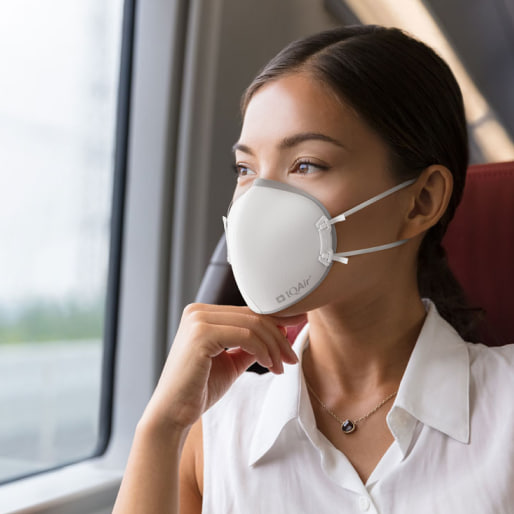
 Sensitive groups should wear a mask outdoors Get a mask |
 Sensitive groups should run an air purifier Get an air purifier |
Protect yourself from air pollution in Grand Forks

Air Purifiers

Face Masks

Air Quality Monitors
Pollen
What is the pollen count in Grand Forks today?
Index

Low
 Tree None | 0% |
 Grass Low | 25% |
 Weed None | 0% |
Source:
wetter.comHealth recommendations
Sensitive groups should reduce outdoor exercise |
Close your windows to avoid dirty outdoor air Get a monitor |
Sensitive groups should wear a mask outdoors Get a mask |
Sensitive groups should run an air purifier Get an air purifier |
Pollen
What is the pollen count in Grand Forks today?
Index
Low
Tree None | 0% |
Grass Low | 25% |
Weed None | 0% |
Source:
wetter.comProtect yourself from air pollution in Grand Forks
Air Purifiers
Face Masks
Air Quality Monitors
Most polluted locations near Grand Forks
Worldwide AQI⁺ ranking
Station ranking
Real-time AQI⁺ station ranking for stations in Grand Forks

City ranking
Real-time Canada AQI⁺ city ranking
Historic air quality near Grand Forks
History
Historic air quality graph for Grand Forks
Historic air quality near Grand Forks
History
Historic air quality graph for Grand Forks
Most polluted locations near Grand Forks
Worldwide AQI⁺ rankingStation ranking
Real-time AQI⁺ station ranking for stations in Grand Forks
City ranking
Real-time Canada AQI⁺ city ranking


Measure your own air quality
Get a monitor and contribute air quality data in your city.


Learn more about air pollution in Grand Forks
What is the level of air pollution in Grand Forks city?
Grand Forks is a city in the Boundary Country of the West Kootenay region of British Columbia, Canada. With a population of just over 4,000 residents, it is not a large city. It can be found at the convergence of the Granby and Kettle Rivers and is slightly north of the border with the United States.
During early August 2021, Grand Forks was experiencing a period of air quality classified as being “Unhealthy for sensitive groups” with a US AQI reading of 112. This United States Air Quality Index figure is calculated using the levels of six of the most commonly occurring air pollutants, which are, nitrogen dioxide, sulfur dioxide, ozone, carbon monoxide and both sizes of particulate matter, being PM2.5 and PM10. It can be used as a standard when comparing air quality in other cities around the world. If data is unavailable for all 6 pollutants, a figure can still be calculated by using what figures there are. In the case of Grand Forks, the only available figure was for PM2.5 which was 40.2 µg/m³. The World Health Organization (WHO) has suggested a target figure of 10 µg/m³ or less so it can be seen that with this reading being over four times the target limit, it is a period of poor quality air.
With pollution at this level, the given advice would be to stay indoors and close all doors and windows to prevent the ingress of more polluted air. An air purifier would be beneficial if one is available. Avoid exercising outside until the quality improves and if venturing outside is unavoidable, then wearing a good quality face mask is essential. The table that is published at the top of this page should help with that decision or download the AirVisual app for constant updates in real-time as to the state of the air.
Does the level of air pollution vary much throughout the year in Grand Forks?
Looking back at the figures for 2020, released by IQAir.com, it can be seen that the worst month for air quality was during September. The figure here was 54.8 µg/m³ which categorized it as being “Unhealthy for sensitive groups”. The next worst for air quality were January, February and November when the level was “Moderate” with 12.6, 13.8 and 12.9 µg/m³, respectively. The months of October and November returned “Good” levels with 10.4 and 11.5 µg/m³. The six months during the middle part of the year achieved the target figure of 10 µg/m³ or less as recommended by the World Health Organization (WHO). June being the cleanest month with a figure of just 4.1 µg/m³.
Historically, records pertaining to air pollution have been kept since 2019 when the recorded figure was 10.6 µg/m³. A surprising decline was recorded in 2020 when the figure was 12.2 µg/m³. This figure is quite surprising because of the restrictions imposed by the COVID-19 pandemic. Many vehicles were temporarily unused as their drivers were not required to travel to the office, instead they were furloughed and allowed to work from home.
This had the effect of drastically reducing pollution within the city center. Many small factories and non-essential production units were also closed which again lead to an improvement in air quality. But for some reason, Grand Forks bucked this trend and recorded a relatively poor figure.
What are the sources of this air pollution in Grand Forks?
Air pollution occurs when the air contains gases, dust, fumes or odor in harmful amounts. Substances that cause air pollution are called pollutants, compounds such as carbon monoxide from car exhausts or sulphur dioxide from coal combustion.
As with most cities, a certain percentage of air pollutions comes from vehicle movement throughout the city. Contrary to popular belief, diesel vehicles are not the only emitters of fine particles leaving the exhaust; new direct-injection gasoline vehicles also contribute to these emissions. In fact, it is all vehicles, regardless of their propulsion system, which generates such particles; quite simply because a good part of it comes from abrasion of tires, brakes and the road surface itself. These thus represent almost half of the total emissions linked to road transport in urban areas.
Combustion of fuel produces more particulates in the exhaust in diesel engines than in gasoline engines. The older generation diesel vehicles thus emitted large quantities. But the introduction, from 2005, of particulate filter technology, a device which was generalized in 2009, has drastically reduced these emissions: diesel vehicles equipped with a filter now emit in the order of one to one, which equates to a few mg/km of particles whereas they previously emitted around 50 mg/km. Particulate matter emissions from the diesel fleet thus fell by 35 percent between 2004 and 2013, despite the increase in the number of vehicles.
Gasoline-powered vehicles were traditionally very low emitters of particles. But the introduction of gasoline direct injection (IDE) technologies from 2007, aimed at reducing fuel consumption, has changed that. These vehicles emit more fine particles, in particular when cold and during strong acceleration.
The abrasion of tires, brakes and the road also generates fine particles, regardless of the vehicle's propulsion technology.
All vehicles are concerned, including the electric vehicle, even if emissions linked to brake wear are reduced compared to a conventional vehicle thanks to energy recovery.
The emissions of fine particles by a private vehicle linked to the phenomena of abrasion of tires, brakes and the road surface are of the order of 5 to 30 mg per kilometer traveled; levels higher than the levels of exhaust emissions of recent vehicles, gasoline and diesel.
Pollution is generated from a variety of sources including emissions from industry, burning of wood and other fuel types for energy and agricultural activities, forest fires and more.
Can anything be done to improve air quality in Grand Forks?
Understanding the source, location and types of emissions in an area is valuable and allows communities to develop targeted actions that can improve air quality in a region. For example, for regions with high particulate matter emissions in the winter, open burning and woodstove emissions could be targeted for reduction, thereby improving local air quality. Air Quality Management is a collaborative effort been multiple stakeholders in a community. Information from data assessment, emissions inventory, and modeling results are often used to build a plan of action to reduce priority contaminants in a region.
An "air shed" or "air basin" is an area in which the terrain and weather conditions hinder the movement of pollutants away from the area. A mountain valley is a common example of an air shed in British Columbia. Many communities have periods of unacceptable air quality, with adverse effects on human health, the environment and visibility.
The Province is also part of the Air Quality Management System (AQMS) which is a federal program to improve air quality. Through the AQMS the Province breaks the province into air zones and assesses air quality be assigning color codes to evaluate the actions each air zone should take to improve air quality. This system allows resources and actions to target “red” zones for improved air quality.
What are the effects of wildfire smoke on human health?
Wildfire smoke is a mixture of PM2.5 and other gases such as carbon monoxide, nitrogen oxides and VOCs. The contents may change depending on the fuel, the weather and the distance from the source of the fire. It is this type of air pollution that people experience the most in British Columbia.
Smoky air makes it difficult for the lungs to get the correct amount of oxygen that they need. It can irritate the respiratory system and cause an immune response which often leads to inflammation in various parts of the body. Commonly found symptoms are eye irritation, runny nose, a sore throat, phlegm production wheezy breathing and headaches. Some may experience more severe symptoms such as shortness of breath, chest pains, dizziness and heart palpitations. Smoke has also been proven to exacerbate certain other ailments such as pneumonia, COVID-19 and ear infections in children.
People whose health is already compromised by an illness will suffer more profusely. Smoky air makes it difficult to continue with the usual daily tasks. Those with pre-existing respiratory problems such as asthma and COPD are at the highest risk of suffering adverse health effects due to smoke. This also applies to people with heart disease, diabetes or cancer who are also at an increased risk. Young children are particularly vulnerable because their immune system is not fully developed and they tend to be more active when playing outdoors. Because of their smaller lung capacity, they breathe in more air.
How can a person reduce the effects of smoke in Grand Forks?
Portable air cleaners that use HEPA filters effectively remove smoke particles from the indoor air. If you have forced-air heating to the home, you can adjust the settings to decrease the amount of air that is introduced to your environment.
If you need a quick break from the smoke, try the library, community center, or shopping mall. They often have temperature-controlled environments which will alleviate the smoke for a respite. When driving the car or riding in a taxi. Keep the windows closed and make sure the airflow system is in recirculated mode.
The more intense you breathe, the more smoke will be inhaled so try to postpone that exercise regime until another day or do it in an indoor, clean environment. Drinking copious amounts of water also helps clear the smoke particles out of the body.
What is dirty air and how does it affect us in Grand Forks?
Smog is the general term used to describe a variety of air pollutants, including ground-level ozone (the main ingredient in smog), particulate matter, carbon monoxide, and nitrogen oxides. The term refers to air pollution that forms when gases from many sources are released into the air and chemically react with each other in sunlight. The prevailing wind off the ocean carries smog inland toward the mountains, where an inversion layer of warm air pushes it downward and trapping smog close to the ground where we live and breathe it.
Ground-level ozone (O3) is a colorless, odorless pollutant that is formed by a chemical reaction between volatile organic compounds (VOCs) and nitrogen oxides (NOx) in the presence of sunlight. The main source of VOCs and NOx are mobile sources which include cars, trucks and buses plus farm equipment and construction equipment, indeed any type of gas-powered engine. In contrast, stratospheric ozone in the highest layer of our atmosphere, better known as the ozone layer, protects the earth from the sun's harmful ultraviolet rays.
Particulate matter (PM) is the term used for a mixture of solid and liquid particles carried by the air. It originates from a variety of sources including automobiles, power plants, construction activities, soil dust, soot, and industrial processes. Coarse particulates (PM10) are generally emitted from sources such as wind-blown dust, vehicles traveling on unpaved roads, and crushing and grinding operations and cement production. Fine particles (PM2.5) can come from the combustion of fuels (cars, power generation, industrial plants) and fugitive dust.
Carbon monoxide (CO) is again a colorless and odorless gas that is a by-product of combustion produced mainly by automobiles. Burned wood and charcoal also emit carbon monoxide, as do forest fires.
The wind can be a good ally in the fight against pollution because it promotes the dispersion of pollutants. But sometimes by moving them, it merely shifts the problem to another area.
Rain also leaches the air by dissolving the molecules of sulfur dioxide and nitrogen oxides in the water. The air is purified, but the rains turn acidic. In itself, it is a very harmful product to structures and also to the living environment.
In summer, high temperatures can act on the formation of ozone. In winter, the temperature differences between night and day cause thermal inversions and pollution domes. In winter, buildings must also be heated and energy produced, which releases pollutants during the combustion of fossil fuels or biomass to produce the energy needed to produce the heat.