Add
AddAir quality in Kumanovo
Air quality index (AQI⁺) and PM2.5 air pollution in Kumanovo • 4.7K Followers • 01:00, Apr 24 Local time
76
US AQI⁺Moderate

Main pollutant:
PM2.5
22.8 µg/m³

6°

4 km/h

68 %
Hourly forecast
Kumanovo air quality index (AQI⁺) forecast


Daily forecast
Kumanovo air quality index (AQI⁺) forecast
| Today | 58 |  | 16° 6° |  20 km/h | 42% |
| Fri | 52 | | 19° 3° | 15 km/h | 51% |
| Sat | 58 | | 20° 6° | 10 km/h | 55% |
Air pollutants
What is the current air quality in Kumanovo?

PM2.5 concentration is currently 4.6 times the World Health Organization annual PM2.5 guideline value.

Health recommendations
 Sensitive groups should reduce outdoor exercise |
 Close your windows to avoid dirty outdoor air Get a monitor |
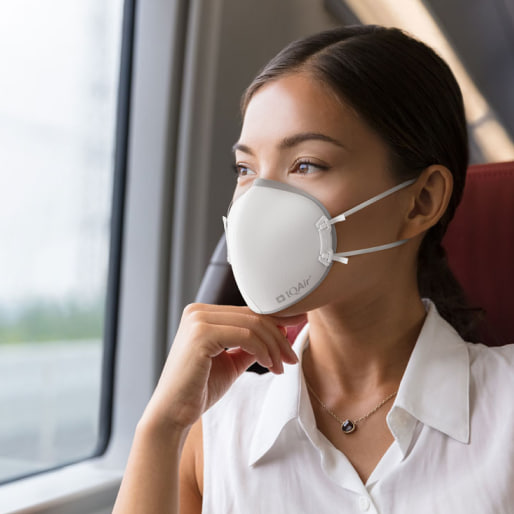
 Sensitive groups should wear a mask outdoors Get a mask |
 Sensitive groups should run an air purifier Get an air purifier |
Protect yourself from air pollution in Kumanovo

Air Purifiers

Face Masks

Air Quality Monitors
Pollen
What is the pollen count in Kumanovo today?
Index

Moderate
 Tree Moderate | 50% |
 Grass Moderate | 50% |
 Weed None | 0% |
Source:
Open-Meteo.comHealth recommendations
Sensitive groups should reduce outdoor exercise |
Close your windows to avoid dirty outdoor air Get a monitor |
Sensitive groups should wear a mask outdoors Get a mask |
Sensitive groups should run an air purifier Get an air purifier |
Pollen
What is the pollen count in Kumanovo today?
Index
Moderate
Tree Moderate | 50% |
Grass Moderate | 50% |
Weed None | 0% |
Source:
Open-Meteo.comProtect yourself from air pollution in Kumanovo
Air Purifiers
Face Masks
Air Quality Monitors
Most polluted locations near Kumanovo
Worldwide AQI⁺ ranking

Historic air quality near Kumanovo
History
Historic air quality graph for Kumanovo
Historic air quality near Kumanovo
History
Historic air quality graph for Kumanovo
Most polluted locations near Kumanovo
Worldwide AQI⁺ ranking


Measure your own air quality
Get a monitor and contribute air quality data in your city.


Learn more about air pollution in Kumanovo
Is Kumanovo a heavily polluted city now?
Kumanovo is a city in North Macedonia and the seat of Kumanovo Municipality, the largest municipality in the country. It is surrounded on all sides by high mountains. According to a census conducted in 2002, Kumanovo had an estimated population of approximately 71,000 people which increased to 105,500 when the entire metropolitan area is considered.
At the beginning of the fourth quarter of 2021, Kumanovo was going through a period of “Moderate! Air quality with a US AQI reading of 58. This reading can be used as a benchmark when comparing other cities around the world. Data is collected with regards to the six most prolific air pollutants commonly found and this figure is calculated from there. If information is not available for all six, then a figure can be deduced using the information that is available. In this case, there were four recordings made. These were for PM2.5 - 15.3 µg/m³, PM10 - 16.3 µg/m³, nitrogen dioxide (NO2) - 4.7 µg/m³ and sodium dioxide (SO2) - 4.7 µg/m³. At this level, the PM2.5 figure is one and a half times above the recommended target figure as suggested by the World Health Organisation (WHO) of 10 µg/m³. However, no amount of air pollution is safe but 10 µg/m³ is regarded as being acceptable.
With levels such as these, the advice would be to stay indoors and close the doors and windows so as to prevent more polluted air from entering the rooms. Those who are sensitive to poor air quality should take extra care and limit their exposure when outside. There is an app available from AirVisual which can be found in any app store and is suitable for most mobile devices. This will tell you of the latest levels of pollution which might help decide whether or not it is safe to go outside.
Does the level of air pollution vary throughout the year in Kumanovo?
Air quality can be very volatile as it can be affected by many variables. Looking at the figures published by IQAir.com for 2020, it can be seen that the best month for air quality was June when the reading of 11.8 µg/m³ put it in the “Good” category. The four months prior to June saw “Moderate” quality air with figures between 12.1 and 35.4 µg/m³. This was the same category as the four months following June. The cold, winter months of January, November and December saw the quality decline into the “Unhealthy for sensitive groups” category with respective figures of 45, 37.9 and 37.3 µg/m³, respectively.
Records for air pollution were not kept in Kumanovo before 2020 when the recorded figure was 22.9 µg/m³. However, this may not be a true reflection of reality because of the COVID-19 pandemic when many cars were unused as their owners were encouraged to work from home and not commute into the city on a daily basis. There were also many small factories and production units that were closed down on a temporary basis so their emissions were halted.
Is there a main source of air pollution in Kumanovo?
Air pollution in Macedonia far exceeds international levels of safety. In 2016, the WHO (World Health Organisation) ranked Skopje as the third worst city in Europe in terms of air pollution with particulate matter (PM2.5 particles). The annual average of Skopje for 2016 was 40 µg/m³ (40 micrograms per cubic metre), which is 4 times higher than the annual WHO directive (10 µg/m³) and 60 per cent higher than the Macedonian official norm and European standards (25 µg/m³). Kumanovo is one of four cities that regularly exceed WHO daily standards (25 µg/m³), and winter is the worst period as seen in the previous paragraph.
According to a recent study, the main sources of PM2.5 particles are the combustion of biomass (i.e., wood) for home heating, dust from landfills, industry and traffic. Contrary to popular belief, waste incineration is not considered a major source of air pollution.
Air pollution is not only harmful to humans, but it also threatens economic growth. Air pollution affects the economy through increased medical costs, reduced productivity and premature death. Air pollution imposes huge costs that will negatively affect the current and future budget of Macedonia.
Burning wood, coal and oil accounts for 62 per cent of Macedonian households that used wood for heating in 2015. The quality of the wood and the stoves used for heating are important. Older stoves and wet wood produce far more particles than modern stoves and properly prepared wood or pellets. Wet wood is even worse.
Traffic emits a range of pollutants including PM particles, carbon monoxide and nitrogen oxides. Older diesel vehicles are the worst polluters, especially those with European emission standards EURO 0 to 2 (zero is the worst grade). About half of the vehicles registered in 2015 had European emission standards EURO 2 or less, while 10 to 18 per cent had EURO 0.
The mountainous territory surrounding Kumanovo worsens the already high level of PM particles in the air, which are concentrated on the surface of the earth, especially in winter. This can cause a phenomenon known as “temperature inversion” which traps the polluted air at ground level.
Can the air quality in Kumanovo be improved?
The first step towards solving the pollution problem is to determine the sources of pollution. For that purpose, the Ministry of Environment and other relevant institutions in the past years made a series of analyses and studies to determine in which period of the year the highest concentrations of pollutants occur. According to these studies, the highest peaks (highest concentrations), when analysing the average monthly or daily concentrations, occur during the winter period during the heating season. It is estimated that as much as 90 per cent of the total emissions of PM particles come from heating (firewood).
What are the detrimental effects breathing polluted air has on the human body?
Healthy people can experience health impacts from breathing polluted air including respiratory irritation or breathing difficulties during strenuous exercise or outdoor activities. The actual risk of adverse effects depends on a person’s current health status, the pollutant type and concentration, and the length of the exposure to the polluted air. Long-term exposure can lead to accelerated aging of the lungs which, in turn, leads to loss of lung capacity and a decrease in lung function. Diseases such as asthma, bronchitis, emphysema, and possibly cancer may develop more rapidly and it can also lead to a shorter lifespan.