Add
AddAir quality in Lampang
Air quality index (AQI⁺) and PM2.5 air pollution in Lampang • 952.6K Followers • 03:00, Apr 24 Local time
122
US AQI⁺Unhealthy for sensitive groups

Main pollutant:
PM2.5
44 µg/m³

25°

5 km/h

46 %
Hourly forecast
Lampang air quality index (AQI⁺) forecast


Daily forecast
Lampang air quality index (AQI⁺) forecast
| Today | 124 |  | 38° 23° |  11 km/h | 32% |
| Sat | 126 |  | 38° 24° | 11 km/h | 36% |
| Sun | 114 | | 36° 22° | 14 km/h | 59% |
Air pollutants
What is the current air quality in Lampang?

PM2.5 concentration is currently 8.8 times the World Health Organization annual PM2.5 guideline value.

Health recommendations
 Reduce outdoor exercise |
 Close your windows to avoid dirty outdoor air Get a monitor |
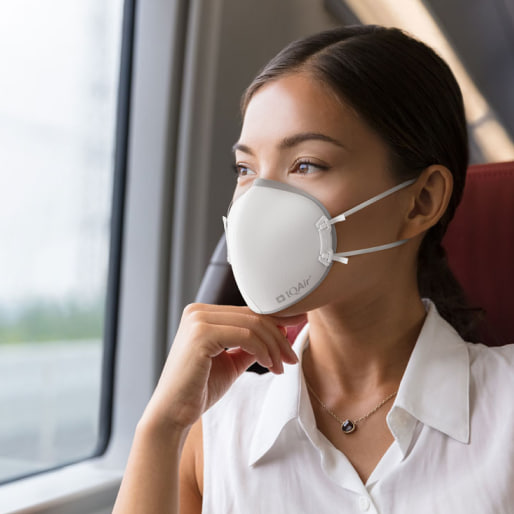
 Sensitive groups should wear a mask outdoors Get a mask |
 Run an air purifier Get an air purifier |
Protect yourself from air pollution in Lampang

Air Purifiers

Face Masks

Air Quality Monitors
Health recommendations
Reduce outdoor exercise |
Close your windows to avoid dirty outdoor air Get a monitor |
Sensitive groups should wear a mask outdoors Get a mask |
Run an air purifier Get an air purifier |
Protect yourself from air pollution in Lampang
Air Purifiers
Face Masks
Air Quality Monitors
Most polluted locations near Lampang
Worldwide AQI⁺ ranking
Station ranking
Real-time AQI⁺ station ranking for stations in Lampang

City ranking
Real-time Thailand AQI⁺ city ranking
Historic air quality near Lampang
History
Historic air quality graph for Lampang
Historic air quality near Lampang
History
Historic air quality graph for Lampang
Most polluted locations near Lampang
Worldwide AQI⁺ rankingStation ranking
Real-time AQI⁺ station ranking for stations in Lampang
City ranking
Real-time Thailand AQI⁺ city ranking


Measure your own air quality
Get a monitor and contribute air quality data in your city.


Learn more about air pollution in Lampang
How bad are air pollution levels in Lampang?
Lampang, also known as Nakhon Lampang, is a city in the northern region of Thailand. It lies approximately 601km north of Bangkok, and 101km from Chiang Mai. It has a long history of farm and crop related economy, with this continuing into modern times, with subsequent demand increases both locally and worldwide turning this industry into a larger source of pollution. Besides this, Lampang also has large deposits of fossil fuels, in particular lignite, which in turn fuels local industrial areas and power plants, which contribute heavily to overall pollution levels.
In 2019, Lampang came in with a PM2.5 reading of 33.1 μg/m³, putting it into the ‘moderate’ pollution bracket, which requires a PM2.5 reading of any number between 12.1 to 35.4 μg/m³. This number indicates that Lampang came in at the higher end of the moderate pollution bracket, with only a few more units being needed to push it up a grouping into the ‘unhealthy for sensitive groups’ bracket, one which as the name implies has detrimental effects on a large portion of the population, such as the young, elderly and those prone to illness.
Lampang's 2019 reading of 33.1 μg/m³ put it in 348th place out of all cities ranked worldwide in terms of their pollution levels, as well as being 13th place out of all cities ranked in Thailand. This is indicative that Lampang has some fair problems with its pollution levels.
What are the main causes of pollution in Lampang?
There are several sources of pollution in Lampang, all of which come together to further compound the PM2.5 and PM10 readings. PM2.5 refers to particulate matter that is 2.5 micrometers or less in diameter, making it a major component used in calculating overall pollution levels, due to its highly negative impact on human health when respired.
A large volume of these microscopic pollutants find themselves coming from open burn sources dotted around Lampang, and although these are deemed highly illegal, they still continue unabated due to the difficulty in enforcing the laws surrounding them, with many farmers continuing this ‘slash and burn’ farming method by cover of dark and in areas that are hard to reach by vehicles.
Besides the large amount of haze and smog emitted from these open burn sources, other causes of pollution would be vehicular emissions (common to all cities in Asia, as well as worldwide) and the use of fossil fuels to power the factories and various plants within Lampang's city limits.
When is pollution at its worst in Lampang?
Going off of the data collected over 2019, the months that came in with the least desirable readings of PM2.5 were January through to April, with December also coming in with an elevated reading of 43.6 μg/m³, putting it into the ‘unhealthy for sensitive groups’ bracket, requiring a PM2.5 count of 35.5 to 55.4 μg/m³ for classification.
However, this number pales in comparison to the earlier months, with a high of 78.1 μg/m³ being recorded in March, followed by an equally poor reading for January at 75.6 μg/m³, both of which put the months into the ‘unhealthy’ bracket, requiring a reading of 55.5 to 150.4 μg/m³ to be classed as such. The first 4 months of the year all fell into this bracket, and as such would make living and breathing the air in Lampang an arduous as well as hazardous task. Preventative measures such as wearing high quality particle filtering masks as well as staying up to date on air pollution levels via air quality maps available on the IQAir website, or the AirVisual app would go a long way in helping to reduce the unhealthy effects attributed to breathing such poor qualities of air.
Of note is that June through to August all came in with the cleanest readings, with August being the best with a reading of 9 μg/m³, putting it within the World Health Organizations target goal of 0 to 10 μg/m³.
What are the main pollutants found in the air in Lampang?
With a majority of its pollution coming from these open burn sources, as well as fumes emitted from factories, the pollution in Lampang would mainly consist of material stemming from combustion processes. Before the main ones are discussed, vehicular emissions would also contribute to the overall pollution levels, giving off large amounts of secondary pollutants such as nitrogen dioxide (NO2) as well as sulfur dioxide (S02), with nitrogen dioxide being the main culprit when it comes to vehicular pollution.
In regards to open burning, PM2.5 and PM10 as well as various other gases and compounds would arise, with ones including carbon monoxide (CO), ozone (O3), volatile organic compounds (VOC’s) and black carbon. Black carbon is of particular importance due to its risk factor when inhaled, finding its creation stemming from the improper combustion of fossil fuels (such as diesel and coal) as well as the burning of organic matter. Other pollutants to mention would be formaldehyde, benzene and polynuclear aromatic hydrocarbons, all of which have equally negative effects on the health of those who inhale them.
Are the pollution levels in Lampang improving?
Looking at the readings taken over the last few years, it can be seen that pollution levels in Lampang have taken a turn for the worse. In 2017 Lampang recorded levels of air pollution with numbers as low as 19.5μg/m³, still in the moderately polluted bracket but somewhat on the lower end of it.
In 2018 the reading came in higher than the year before, with 23.3μg/m³ being the yearly average. In more recent years the reading of 33.1μg/m³ as recorded in 2019 really highlighted the pollution issue that Lampang faces, being heavily swayed by the open burn fires as well as the pollution being emitted from factories.
The pollution has become so bad that schools were ordered closed in early 2020, something that is not new in Thailand as well as many other nearby Asian countries such as Malaysia and Singapore. The pollution levels recorded in the beginning portions of the year are indeed bad enough to skew the readings for the rest of the year and make the quality of air in Lampang very unsafe to breathe during these times