Add
AddAir quality in Suphan Buri
Air quality index (AQI⁺) and PM2.5 air pollution in Suphan Buri • 232.4K Followers • 10:00, Apr 25 Local time
82*
US AQI⁺Moderate

Main pollutant:
PM2.5
25.6 µg/m³

37°

15 km/h

34 %
Hourly forecast
Suphan Buri air quality index (AQI⁺) forecast


Daily forecast
Suphan Buri air quality index (AQI⁺) forecast
| Today | 80 |  | 38° 27° |  19 km/h | 48% |
| Sun | 88 | | 39° 27° | 28 km/h | 44% |
| Mon | 76 | | 39° 27° | 22 km/h | 48% |
Air pollutants
What is the current air quality in Suphan Buri?

PM2.5 concentration is currently 5.1 times the World Health Organization annual PM2.5 guideline value.

Health recommendations
 Sensitive groups should reduce outdoor exercise |
 Close your windows to avoid dirty outdoor air Get a monitor |
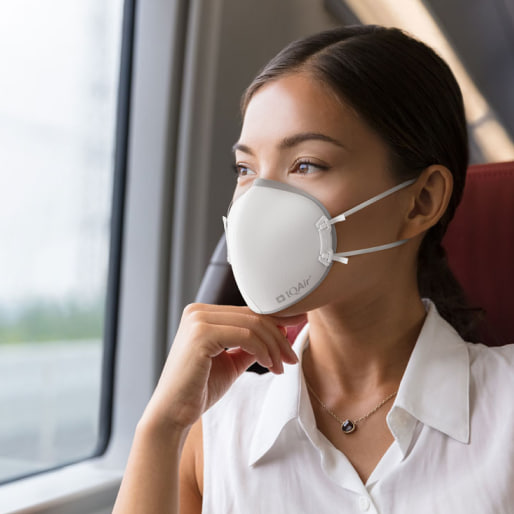
 Sensitive groups should wear a mask outdoors Get a mask |
 Sensitive groups should run an air purifier Get an air purifier |
Protect yourself from air pollution in Suphan Buri

Air Purifiers

Face Masks

Air Quality Monitors
Health recommendations
Sensitive groups should reduce outdoor exercise |
Close your windows to avoid dirty outdoor air Get a monitor |
Sensitive groups should wear a mask outdoors Get a mask |
Sensitive groups should run an air purifier Get an air purifier |
Protect yourself from air pollution in Suphan Buri
Air Purifiers
Face Masks
Air Quality Monitors
Most polluted locations near Suphan Buri
Worldwide AQI⁺ ranking
City ranking
Real-time Thailand AQI⁺ city ranking

Historic air quality near Suphan Buri
History
Historic air quality graph for Suphan Buri
Historic air quality near Suphan Buri
History
Historic air quality graph for Suphan Buri
Most polluted locations near Suphan Buri
Worldwide AQI⁺ rankingCity ranking
Real-time Thailand AQI⁺ city ranking


Be the first to measure and contribute air quality data to your community


Learn more about air pollution in Suphan Buri
What is the air quality index of Suphan Buri?
Suphan Buri is a rural town in central Thailand, located within Mueang Suphan Buri District. It is approximately 100 kilometres north of Bangkok. In 2016 it had an estimated population of 26,500, so it is not a huge city. It lies on the Tha Chin River and is surrounded by agricultural land where mostly rice and sugarcane are grown.
In early 2021, Suphan Buri was experiencing some very “Unhealthy” air with a US AQI figure of 168. The concentration level of the fine dust PM2.5 pollutant was 88.3 µg/m³. With concentrations as high as this it is advisable to wear a good quality mask when venturing outside and to close doors and windows to prevent the ingress of dirty air into the home. All types of outdoor exercise should be postponed until the air quality improves. An air purifier would be beneficial if one is available.
What is the main source of air pollution in Suphan Buri?
Being in the heart of a predominately agricultural area, the main source of air pollution here comes from the burning of organic waste material.
PM2.5 particles have been a problem over the last few days due to a forest fire which started in a neighbouring province. This was extinguished on 13thJanuary. Because of this, the governor of Suphan Buri announced a fine of 100,000 baht for people who burned sugarcane fields in six districts, which caused PM2.5 dust to cover the area of Suphan Buri Province for the last 2 days.
Is air pollution in Suphan Buri getting better or worse?
In Bangkok, scientists estimate that between 24 and 38 per cent of the PM2.5 pollutants are caused by the burning of agricultural biomass which is mainly sugarcane and rice residues. Most of this comes from the rural areas of Thailand, but a small percentage blows in from the neighbouring country of Cambodia.
Sugarcane is one of Thailand’s most lucrative crops which provides more than 1.5 million jobs. Approximately 75 per cent is exported to other South East Asian countries because of very favourable export agreements.
A major negative effect produced by this industry is air pollutants. Winds blow emissions from farms into Bangkok and elsewhere. Harvesting occurs from November to February which is when the city experiences its worst levels of pollution. Burning sugarcane is widespread, accounting for between 60–67 per cent of total production. Farmers state that they burn it because it is cheaper and requires less labour and time than using harvesting machines. Mechanised harvesting is practised less than 10 per cent of the time.
Financial incentives were put forward but they were unsubstantial which meant farmers had no interest in them and continued to sell burnt cane to the mills. Many farmers get around the fact that it is illegal, by burning the cane fields during the night. The governor has announced a reward to people who inform authorities of any such violations by farm owners.
Another suggestion that has been put forward is that the sugar-producing factories should supply the farmers with suitable machinery in order for them to continue to supply the factories with the required raw materials.
If there are not enough sugarcane harvesters for the farmers to supply to the factory, it must reduce the quantity and the planting area.
What is the pollution level in Suphan Buri?
Typical levels of the pollutants are as follows: PM2.5 - 88 µg/m³, PM10 – 33 µg/m³, ozone (O3) – 44 µg/m³, nitrogen dioxide (NO2) – 15 µg/m³, carbon monoxide (CO) – 526 µg/m³ and sulphur dioxide (SO2) - 6 µg/m³.
The last few years' annual deteriorations in air quality early in the New Year coincides with the annual sugar cane harvest, which normally runs from November to March.
In January 2020, the local authorities in Bangkok ordered the closure of 437 schools in the city because of the worsening quality of the air. This was due to the sugarcane being burnt in the surrounding rural areas.
What can be done to improve the air quality in Suphan Buri?
The obvious, immediate but costly way to reduce burning would be for the government to subsidise or provide harvesting machinery to farmers. Broader solutions are complex and difficult. Potential ideas include moving away from monoculture production, the cultivation of a single crop in a given area, to agro-ecology practices, such as crop diversification and rotation; initiating land reform measures and breaking up the large agribusiness monopolies so that smallholder farmers can produce more and be less indebted; and, perhaps and controversially, reducing the role of agriculture in the economy. Nonetheless, what is clear is that continuing to uphold the status quo will not reduce air pollution for the foreseeable future.
What are the effects of breathing Suphan Buri’s poor quality air?
Air pollution is considered to be one of the most pressing environmental and health issues facing most countries today. According to the World Health Organisation (WHO), exposure to fine particulate matter (PM2.5) has potentially the most significant adverse effects on health compared to other pollutants. This is because of its microscopic size PM2.5 can be inhaled deeply into the lungs and cause serious health problems including both respiratory and cardiovascular disease, having its most severe effects on children and elderly people. Those with pre-existing medical problems are particularly susceptible too.
Research has shown that even brief exposure to air pollution can cause severe myocardial infarction, including heart attack and arrhythmia, which is where the heart beats irregularly. There is also a risk of death from acute cardiac arrest. In addition, there is recent evidence that Arteriosclerosis and long-term exposure to fine dust particles of PM2.5 are linked. The sediment, called plaques, is deposited in the blood vessels, which can lead to heart attack and ischemic stroke.
It is also a threat to the lungs and the airways because air pollution is both a common cause and a factor that can lead to lung and respiratory diseases and exacerbate diseases such as asthma, COPD and lung cancer. It is believed that long-term exposure to air pollution increases the risk of hardening the cerebral arteries, leading to higher blood pressure and increased blood viscosity. These are all risk factors that can cause blood clots in the brain.