Add
AddAir quality in Huntsville
Air quality index (AQI⁺) and PM2.5 air pollution in Huntsville • 6.6K Followers • 14:00, Apr 23 Local time
62
US AQI⁺Moderate

Main pollutant:
PM2.5
14.9 µg/m³

26°

13 km/h

42 %
Hourly forecast
Huntsville air quality index (AQI⁺) forecast


Daily forecast
Huntsville air quality index (AQI⁺) forecast
| Today | 62 | | 27° 14° |  15 km/h | 57% |
| Fri | 63 |  | 24° 16° | 21 km/h | 69% |
| Sat | 56 |  | 22° 17° | 14 km/h | 91% |
Air pollutants
What is the current air quality in Huntsville?

PM2.5 concentration is currently 3 times the World Health Organization annual PM2.5 guideline value.

Health recommendations
 Sensitive groups should reduce outdoor exercise |
 Close your windows to avoid dirty outdoor air Get a monitor |
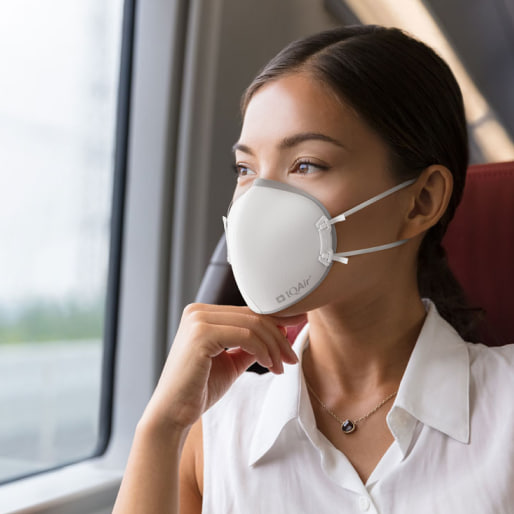
 Sensitive groups should wear a mask outdoors Get a mask |
 Sensitive groups should run an air purifier Get an air purifier |
Protect yourself from air pollution in Huntsville

Air Purifiers

Face Masks

Air Quality Monitors
Pollen
What is the pollen count in Huntsville today?
Index

Low
 Tree Low | 25% |
 Grass Low | 25% |
 Weed Low | 25% |
Source:
wetter.comHealth recommendations
Sensitive groups should reduce outdoor exercise |
Close your windows to avoid dirty outdoor air Get a monitor |
Sensitive groups should wear a mask outdoors Get a mask |
Sensitive groups should run an air purifier Get an air purifier |
Pollen
What is the pollen count in Huntsville today?
Index
Low
Tree Low | 25% |
Grass Low | 25% |
Weed Low | 25% |
Source:
wetter.comProtect yourself from air pollution in Huntsville
Air Purifiers
Face Masks
Air Quality Monitors
Most polluted locations near Huntsville
Worldwide AQI⁺ ranking
Station ranking
Real-time AQI⁺ station ranking for stations in Huntsville
Historic air quality near Huntsville
History
Historic air quality graph for Huntsville
Historic air quality near Huntsville
History
Historic air quality graph for Huntsville
Most polluted locations near Huntsville
Worldwide AQI⁺ rankingStation ranking
Real-time AQI⁺ station ranking for stations in Huntsville


Measure your own air quality
Get a monitor and contribute air quality data in your city.


Learn more about air pollution in Huntsville
What is the current level of air pollution in Huntsville now?
Huntsville is a city in the Appalachian region of northern Alabama and is the county seat of Madison County. According to the 2020 census, Huntsville had an estimated population of approximately 203,000 people. This ranked it as Alabama’s second-largest city, after Birmingham. Once the metropolitan area is included, the population figure jumps up to 463,000 people.
In the middle of 2021, Huntsville was experiencing a period of “Moderate” air quality with a US AQI reading of 79. This United States Air Quality Index number is calculated using the levels of six of the most prolific air pollutants, which are, nitrogen dioxide, sulfur dioxide, ozone, carbon monoxide and both sizes of particulate matter, being PM2.5 and PM10. It can be used as a standard when comparing air quality in other cities around the world. If data is unavailable for all 6 pollutants, a figure can still be calculated by using what figures there are. For Huntsville, the only recorded figure was for PM2.5 which was 25.6 µg/m³. The World Health Organization (WHO) has suggested a target figure of 10 µg/m³ or less so it can be seen that with this reading being over twice the target limit it is a period of poor quality air.
This level of pollution is certainly not extreme but precautions should still be taken. The given advice would be to stay indoors if possible and close all doors and windows to prevent the ingress of more polluted air. Avoid exercising outside until the quality improves but if venturing outside is unavoidable, then wearing a good quality face mask is essential. The table that is published at the top of this page should help with that decision or download the AirVisual app for constant updates as to the state of the air in real-time.
What is the level of polluted air during other months of the year in Huntsville?
Looking back at the figures for 2020 released by the Swiss air monitoring company, IQAir.com, it can be seen that the two worst months for poor quality air were in June and July when the air quality was “Moderate” with figures of 12.1 µg/m³ for both months. The following months of August and September as well as December saw an increase in quality when the readings classified it as being in the “Good” bracket. The respective figures were 10.3, 10.3 and 10.4 µg/m³. For the remaining seven months of the year, Huntsville achieved the WHO target figure of being less than 10 µg/m³. The cleanest months were in January and February with 7.4 and 6.6 µg/m³. February was the best month of the year for air quality.
Historically, records relating to air quality have been kept since 2017 when the annual average was 9.4 µg/m³. This figure was repeated in the following year before a slight decline to 9.6 µg/m³ in 2019. However, 2020 saw its return to 9.4 µg/m³. This figure is in line with many other cities throughout the world. Because of the COVID-19 pandemic, many vehicles were no longer in daily use in an attempt to halt the spread of the virus. Many factories and non-essential production units were also required to close which removed their emissions from the atmosphere.
Where does the air pollution come from in Huntsville?
As with most large cities, the main source of pollution comes from the sheer volume of vehicles on the public highway, but technological advances have helped clean the air. For example, emission controls on vehicles and gasoline vapors being reclaimed at the pump. There are approximately 150 gas stations throughout the city and they all have permits for the required vapor recovery systems.
The main sources of air pollution linked to automobile traffic are from cars, trucks and buses. When an engine burns fuel, either gasoline or diesel, it releases pollutants into the air that can harm your health. These pollutants are nitrogen oxides, carbon monoxide, fine particles and volatile organic compounds. Additionally, the part of the gasoline used by the engine that evaporates without being burned and the wear of tires and brakes also cause air pollution. Emissions from automobile traffic also contribute to the formation of smog.
Cars, trucks and buses powered by fossil fuels are one of the main sources of air pollution. They emit more than half of the nitrogen oxides in the air and are one of the largest emitters of gases associated with global warming in the United States. Scientific studies have identified that these pollutants have negative impacts on almost every organ in the body.
Heavy-duty vehicles play a central role in our daily lives. Trucks transport products from factories to stores, collect our garbage and deliver our packages, while buses transport thousands of people in cities. But the emissions from these vehicles also negatively affect public health and the environment.
Although they only represent 5 percent of all vehicles in the United States, they generate more than 25 percent of all vehicle emissions associated with global warming in the country, and a significant amount of air pollution. As more and more cargo is transported in the US each year, the challenge of controlling emissions from this sector will continue to grow.
Just as electric cars are reducing pollution from passenger vehicles, buses and trucks powered by batteries or hydrogen can do the same in the commercial sector.
Hydrogen and electric trucks and buses, especially public transit buses, are already operating in several cities in the United States, and these fleets will continue to grow as new models are developed. A growing number of cities, including New York and Los Angeles, which have the nation's largest public bus fleets, have pledged to convert their entire fleets to zero-emission buses.
Can anything be done to reduce air pollution in Huntsville?
Air pollution affects millions of people around the world. The air we breathe harms every part of our body. And one of the main causes of air pollution which is the burning of fossil fuels, is also behind the climate crisis that endangers the planet we live on. The air pollution problem is a crisis in itself, but it is a crisis that we can solve. And many people throughout the world are acting against it.
Any fossil fuel is bad, but coal is the worst. When burned, it emits more carbon dioxide than oil or gas to generate the same energy, exacerbating global warming. Coal is also toxic. When it burns, it emits substances such as mercury or arsenic and small soot particles that aggravate pollution. And, when we breathe, these microparticles affect our lungs and our heart, increasing the risk of attacks.
But the worst thing about coal is how prevalent it is. More than a third of the world's electricity is still produced from coal. It is still the biggest source of energy! Coal-fired power plants degrade air quality for hundreds of kilometers around and are sometimes located in the cities themselves, affecting millions of people who cannot escape pollution.
Almost all cars run on fossil fuel which is either diesel or gasoline. And, like coal, burning fuel is expensive. Diesel and gasoline cars emit carbon dioxide and other gases that seriously affect us. Among them, the nitrogen dioxide that comes out of the exhaust pipes is one of the substances that most damages our health. But there are other ways of moving that allow us to do without the car.
More and more cities are discovering the benefits of reducing traffic. Whether through more pedestrian areas or with better infrastructure to make public transport more efficient, faster and more accessible, there are many ways that cities have so that we can do without the car more often. And the benefits are immediate: more space for everyone, cleaner air, and a healthier and more active population. And for the journeys that still need to be done by car, we must begin to think of them differently. Instead of diesel and gasoline, vehicles must be 100 percent electric to reach zero emissions, thus avoiding thousands of sources of pollution spread throughout the city. And if they are recharged by renewable energy, their total emissions are much lower.
Many countries have decided to cease sales of diesel and gasoline-powered cars by 2030 or 2035.
Industry is a fundamental element of the U.S. economy. But at the same time, it is responsible for more than half of the total emissions of some of the main air pollutants and greenhouse gases, as well as other important environmental impacts, such as the release of pollutants into water and soil, waste generation and energy consumption.
Air pollution is often related to the burning of fossil fuels. This is the case for power plants, but also for many other industrial activities that may have their own production of electricity or heat on site, such as iron and steel manufacturing or cement production. Some activities generate dust, which contributes to concentrations of particles in the air, while the use of solvents, for example for the transformation of metals or the production of chemicals, can lead to emissions of polluting organic compounds.
What are the detrimental effects of air pollution in Huntsville on our health?
Outdoor ambient air pollution is a broader term used to describe air pollution in outdoor environments. Poor outdoor ambient air quality occurs when pollutants reach concentrations high enough to adversely affect human health and the environment.
Exposure to high levels of air pollution can cause a variety of adverse health outcomes. Air pollution can increase the risk of respiratory infections, heart disease, stroke and lung cancer. Both short-term and long-term exposure to air pollutants has been associated with adverse health impacts. The most severe impacts affect people who are already sick. Children, the elderly and the poor are most susceptible. The most harmful pollutants for health, closely associated with excessive premature mortality, are fine PM2.5 particles that penetrate deep into the lung ducts.
Particulate matter (PM) is the term for particles that are suspended in the air, such as dust, soot, smoke and aerosol. Large amounts of particulate matter are typically emitted from sources such as diesel vehicles, burning waste and crops, and coal-fired power plants. Particles less than 10 microns in diameter (PM10) present a health problem because they can be inhaled and accumulate in the respiratory system. Particles less than 2.5 microns in diameter (PM2.5) are called "fine" particles and pose greater health risks. Due to their small size (about 1/30 the average width of a human hair), fine particles can lodge deep in the lungs where they can eventually pass into the bloodstream and travel around the body.
Smog is the general term used to describe a variety of air pollutants, including ground-level ozone (the main ingredient in smog), particulate matter, carbon monoxide, and nitrogen oxides. The term refers to air pollution that forms when gases from many sources are released into the air and chemically react with each other in sunlight. The ocean breeze carries smog inland toward the mountains, where an inversion layer of warm air pushes it downward, trapping the smog close to the ground where we live and breathe.
Ground-level ozone (O3) is a colorless, odorless pollutant that is formed by a chemical reaction between volatile organic compounds (VOCs) and nitrogen oxides (NOx) in the presence of sunlight. The main sources of VOCs and NOx are mobile sources which include cars, trucks and buses plus farm equipment and construction equipment. In contrast, stratospheric ozone in the highest layer of our atmosphere, better known as the ozone layer, protects the earth from the sun's harmful ultraviolet rays. Ozone is a strong irritant that can limit the airways, forcing the respiratory system to work harder to provide oxygen. It can also aggravate respiratory diseases such as emphysema, bronchitis, and asthma. It can also damage deep parts of the lungs, even after symptoms such as a cough or sore throat go away. It has a similar effect to sunburn. It can decrease resistance to infection and lead to increased fatigue as well as causing noise when breathing, chest pain, dry throat, headache or nausea.