Add
AddAir quality in Cincinnati
Air quality index (AQI⁺) and PM2.5 air pollution in Cincinnati • 18.8K Followers • 13:00, Apr 23
53
US AQI⁺Moderate

Main pollutant:
PM2.5
10.5 µg/m³

26°

16 km/h

37 %
Hourly forecast
Cincinnati air quality index (AQI⁺) forecast


Daily forecast
Cincinnati air quality index (AQI⁺) forecast
| Today | 55 | | 27° 16° |  19 km/h | 45% |
| Fri | 64 |  | 27° 16° | 25 km/h | 56% |
| Sat | 33 | | 23° 13° | 15 km/h | 58% |
Air pollutants
What is the current air quality in Cincinnati?

PM2.5 concentration is currently 2.1 times the World Health Organization annual PM2.5 guideline value.

Health recommendations
 Sensitive groups should reduce outdoor exercise |
 Close your windows to avoid dirty outdoor air Get a monitor |
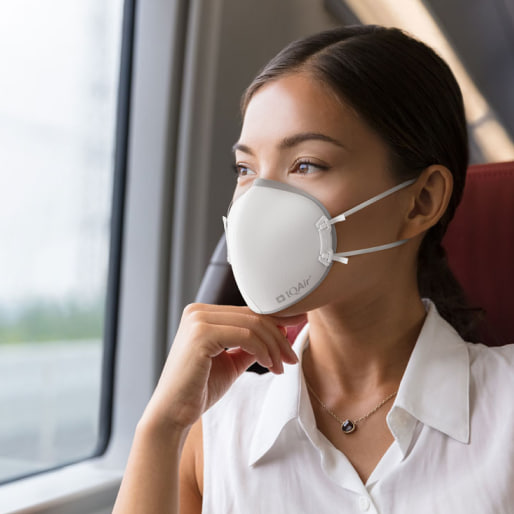
 Sensitive groups should wear a mask outdoors Get a mask |
 Sensitive groups should run an air purifier Get an air purifier |
Protect yourself from air pollution in Cincinnati

Air Purifiers

Face Masks

Air Quality Monitors
Pollen
What is the pollen count in Cincinnati today?
Index

Moderate
 Tree Low | 25% |
 Grass Moderate | 50% |
 Weed Moderate | 50% |
Source:
wetter.comHealth recommendations
Sensitive groups should reduce outdoor exercise |
Close your windows to avoid dirty outdoor air Get a monitor |
Sensitive groups should wear a mask outdoors Get a mask |
Sensitive groups should run an air purifier Get an air purifier |
Pollen
What is the pollen count in Cincinnati today?
Index
Moderate
Tree Low | 25% |
Grass Moderate | 50% |
Weed Moderate | 50% |
Source:
wetter.comProtect yourself from air pollution in Cincinnati
Air Purifiers
Face Masks
Air Quality Monitors
Most polluted locations near Cincinnati
Worldwide AQI⁺ ranking
Station ranking
Real-time AQI⁺ station ranking for stations in Cincinnati
City ranking
Real-time USA AQI⁺ city ranking
Historic air quality near Cincinnati
History
Historic air quality graph for Cincinnati
Historic air quality near Cincinnati
History
Historic air quality graph for Cincinnati
Most polluted locations near Cincinnati
Worldwide AQI⁺ rankingStation ranking
Real-time AQI⁺ station ranking for stations in Cincinnati
City ranking
Real-time USA AQI⁺ city ranking


Measure your own air quality
Get a monitor and contribute air quality data in your city.


Learn more about air pollution in Cincinnati
Is Cincinnati, Ohio a city with polluted air?
Cincinnati, a city located within Ohio and the government seat of Hamilton County, is subject to varying degrees of air quality throughout the year. Whilst a majority of its months manage to fall within the more optimal levels of air pollution as set out by the World Health Organization, there have been other months on record whereby the pollution levels rise somewhat, making it possible for negative side effects or certain health issues to arise, particularly amongst vulnerable members of the population.
In 2020, Cincinnati presented with a yearly PM2.5 average of 10.1 μg/m³, placing it in the 'good' rating bracket of air quality. As well as achieving this rating, it also placed the city in 2507th place out of all cities ranked globally, for 2020. This is a relatively poor ranking, indicating the pollution levels present were enough to skew Cincinnati’s reading to the point where it came in many positions ahead of other cities throughout the United States.
In July of 2021, Cincinnati presented with a US AQI reading of 31, placing it into the 'good' air quality rating bracket. This is the most optimal level of air quality when referring to the US AQI rating, and requires a reading of anywhere between 0 to 50 to be classified as such. In the same month, however, higher readings were also seen, with US AQI readings of 66, 77 and 88 all being on record. These were one step up in the 'moderate' rating bracket, which requires a reading of 51 to 100.
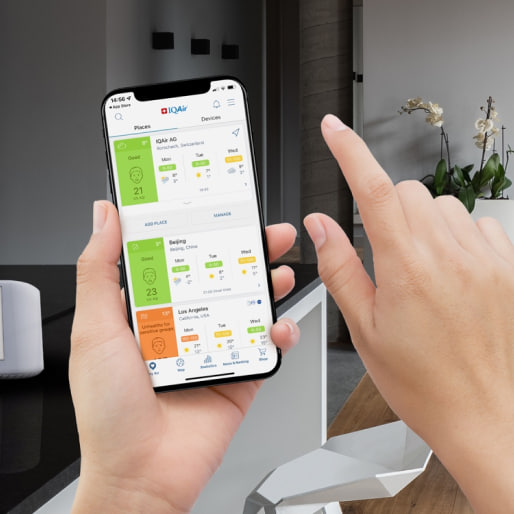
The US AQI reading is a figure aggregated from the main pollutants found in the air, based on their volume. These include ones such as ozone (O3), nitrogen dioxide (NO2), sulfur dioxide (SO2), carbon monoxide (CO), as well as the two main types of particle pollution, PM10 and PM2.5. In closing, Cincinnati is a city that maintains prolonged spells of good air quality but may be subject to sudden elevations that could cause adverse health effects among certain portions of the population. As such, careful monitoring of air quality forecasts can be utilized to stay up to date on changing pollution levels, available both on this page as well as the AirVisual app.
Why is Cincinnati polluted right now?
Contributing factors to elevated levels of pollution that can sometimes be seen in Cincinnati include ones that come from a variety of combustion sources, as well as other activities or industries that disturb large amounts of earth which can add heavily to the particle pollution levels. PM2.5 is used prevalently as a unit of measurement due to how dangerous it is, being considered as the most hazardous pollutant that can be found in the air in Cincinnati and throughout the state of Ohio.
PM2.5 refers to particulate matter that is 2.5 micrometers or less in diameter, on occasion going down to sizes many microns smaller. It is this minute size, as well as the material that it is composed of that gives it its highly dangerous nature. At roughly 30 times smaller than the width of a human hair, it can bypass the body's defense systems and penetrate deep into the tissue of the lungs. From here it can make its way into the bloodstream via the small air sacs, or alveoli in the lungs. With fine particles in the bloodstream, all manner of illnesses can be caused, with cancer, heart disease and heart attacks, strokes, alterations to the nervous system, systemic inflammation and death all being possible.
PM2.5 is formed from materials such as dust, water droplets and vapors, sulfates, metals, soot and many other harmful materials.
Regarding the sources of these particles and other pollutants, they would be ones such as exhaust fumes emitted from vehicles. With rising vehicle ownership being a worldwide issue, ambient pollution levels can be driven up by the increased use of cars. Furthermore, heavier freight vehicles such as lorries, trucks and buses can give out more pollution than smaller vehicles, with many of them utilizing fossil fuels such as diesel. Eventual wear and tear of tire treads can also lead to large amounts of microscopic rubber particles being deposited into the atmosphere, bodies of water, and the earth.
Other sources include emissions from factories, power plants and other similar industrial sites, many of which also use fossil fuels to obtain their energy, as well as powering heavy machinery, also seen in construction sites. These construction sites can also leak large amounts of fine particles, especially if they are poorly maintained, with finely ground silica, gravel and other forms of dust making their way out from such sites.
What are the main forms of air pollution present in Cincinnati?
Whilst the several main pollutants that go into making up the US AQI aggregate have already been touched upon, there would be many more air contaminants in Cincinnati that can cause damage to human health, as well as bringing about climate-changing effects and harming various ecosystems.
The previously mentioned ozone is a pollutant that is of great concern in Cincinnati and many other cities throughout the United States. Better known as smog when it accumulates in large enough (often visible) quantities on the ground level, ozone is formed when the various oxides of nitrogen (NOx), as well as gases and other chemical compounds produced by vehicles or other combustion sources, are exposed to high enough levels of solar radiation, making it most prominent during the sunnier months of the year. It has a tendency to form in busy roads, or areas that see a high level of traffic, due to the abundance of prerequisite pollutants available.
The solar radiation forces a chemical reaction to take place, creating ground-level ozone which carries with it a myriad of health issues, including nausea, inflammation of the respiratory tract and lung tissue, headaches as well as the triggering of conditions such as asthma. Whilst it is an essential part of the stratosphere (forming the well-known ozone layer, which acts as a vital shield against ultraviolet radiation) which is typically around 15 to 30km away from the surface of the earth, when it accumulates on ground level it instead becomes a highly dangerous secondary pollutant.
Secondary pollutants form in the atmosphere from primary pollutants, often requiring a coalescing of certain pollutants under the right meteorological circumstances. Primary pollutants come directly from a singular source such as a car engine, factory boiler, a forest fire or any form of incomplete combustion. Of note is that certain pollutants can be both primary and secondary pollutants, with nitrogen dioxide being an example of one, emanating directly from cars as well as forming in the atmosphere.
Further pollutants that may be found throughout Cincinnati would be ones such as black carbon and volatile organic compounds (VOCs). Both of these are once again formed from the incomplete combustion of fossil fuels and organic matter. Low-quality wood stoves or burners, coupled with wood or other organic material that is not thoroughly dried or adequately prepared for combustion can give off large amounts of smoke, which is laden with large amounts of black carbon, the main component of soot.
Black carbon has carcinogenic effects when inhaled, as well as the many other damaging properties that ultrafine PM2.5 materials carry with them. It also has climate-changing properties, due to its ability to absorb solar radiation and convert it directly into heat, which has a warming effect on the environment. Regarding VOCs, they include among them benzene, which is also carcinogenic and damaging to human health, along with toluene, xylene, methylene chloride, formaldehyde and butadiene. Their volatile nature enables them to maintain a gaseous state under much colder conditions, making them easier to breathe throughout the year. VOCs are also one of the main contributors to indoor air pollution, with many household items emanating such compounds. Wood varnish and paints, along with certain glues, preservatives and paint strippers can all give off VOCs, as well as cosmetic items or toiletries. Air fresheners and deodorants (or essentially any aerosol) contain them, along with other seemingly innocuous sources such as scented candles, perfumes and other various bathroom or home products.
Other forms of air pollution that may be present in certain locations throughout Cincinnati (changing with location due to factors such as proximity to industrial zones or busy roads) would be ones such as heavy metals, often given off from certain factory processes or the combustion of many materials. These include lead, mercury and cadmium, and although they would be far less prevalent in the state of Ohio due to stricter regulations regarding emission standards and waste disposal, they still may be found in the atmosphere, as well as certain bodies of water or soil.
When is the air quality more polluted in Cincinnati?
Observing the air quality records taken throughout 2020, it can be seen that Cincinnati had several months of its year in which the PM2.5 count rose to more elevated levels. Whilst they were not extreme, any change in air pollution levels has the chance to cause adverse health effects. With any amount of pollution present, there is also the chance of these ill-effects occurring, with the severity of them also rising as the pollution count goes up.
The months that came in with noticeably higher readings of air pollution were June through to August, as well as November and December. Their readings in order were 10.6 μg/m³, 12.5 μg/m³, 10.8 μg/m³, 11.2 μg/m³ and 13.7 μg/m³ respectively. This placed the months of June, August and November into the 'good' air quality rating bracket, which requires a PM2.5 reading of anywhere between 10 to 12 μg/m³ to be classified as such (also color-coded as green, the same as the US AQI rating of the same name).
Whilst these are still respectable levels of air quality, especially when compared to more polluted cities that have readings many times higher than this (particularly due to certain events such as forest fires causing massive spikes in the PM2.5 count), those who belong to vulnerable demographics of the population may start to experience some adverse health effects.
The months that went higher in their pollution levels would bring with them even more potential harmful effects, with July and December coming in within the 'moderate' rating bracket of air pollution, which requires a PM2.5 reading of anywhere between 12.1 to 35.4 μg/m³ to be classified as such.
At such levels, sensitive individuals should start to avoid outdoor or strenuous activity and exercise of any kind, to avoid the health risks that come with breathing higher levels of particles and other harmful materials (with exercise heavily raising your breathing rate and thus increasing the amount of pollution that can be inhaled). With all the numbers considered, December was the most polluted month of the year in 2020, with its reading of 13.7 μg/m³.
Does Cincinnati have clean air?
Whilst there are certain times in which the pollution level does elevate, Cincinnati also has some fairly respectable levels of air quality. Much of the year came in within the World Health Organization's (WHO's) target goal for the most optimal level of air quality, at 10 μg/m³ or less (albeit on the higher end of this scale, as the closer to 0 the PM2.5 reading is, the more optimal it becomes).
The months that came in with such ratings were January through to May, as well as September and October. Their readings were 9.4 μg/m³, 9.2 μg/m³, 8.4 μg/m³, 9.2 μg/m³, 7.6 μg/m³, 9.4 μg/m³ and 9.3 μg/m³. These were all on the higher end of the WHO's target goal and only a few units away from being moved up into the next air quality rating bracket. Out of all of the months, May had the cleanest level of air quality with its PM2.5 reading of 7.6 μg/m³.
It is at times such as these when the air would be freest from smoke, clouds of hazardous particles, smog and other contaminants. Regarding data from past years, it appears that Cincinnati has made slight improvements however it failed to improve upon its 2017 reading, and the 2020 reading has the covid-19 outbreak to take into consideration, which saw mass restrictions imposed which severely lessened the amount of movement possible for many months of the year, hence having a lower pollution reading.
Looking at some of the PM2.5 readings from years past, 2017 presented with a PM2.5 average of 9.7μg/m³, placing it within the WHO's target goal by a small measure. This was followed by 10.4 μg/m³ in 2018, and 11.2 μg/m³ in 2019, indicating that whilst 2017 had the most optimal level of yearly air quality, Cincinnati did manage to improve upon its two years before 2020.






Where is the cleanest air quality in Cincinnati?
- Heroes Sports Park31
- Mount Washington Elementary School48
- Cincinnati Near Road49
- 3525-3523 Vine St50
- Oyster Bay Court50
- 224 Woolper Ave52
- 746 Richmond St52
- 837-815 Bank St52
- California Golf Course52
- Madtree- South Avondale School52
- Reeves Golf Course52
- 1167-1111 Sunset Ave53
- 3327-3301 Beekman St53
- Cincy Air Watch- Hyde Park Library53
- College Dr53
- Hyde Park53
- Sycamore53
- Wayne Park53
- 2132-2134 Staebler St54
- 4770 Hamilton Ave54
- 615 Clinton Springs Ave54
- Boldface Park54
- Cincy Air Watch- Northside Library54
- Madisonville54
- Rockdale Academy54
- Roll Hill School54
- Spring Grove Ave54
- Dater Montessori School55
- Eastside Recreation Center55
- Hirsch Recreation Complex57
- Central Avenue58
- Taft NCore PAMS59